Showing posts with label mammoths. Show all posts

Monday, 17 February 2025

Helping to bring Mammoths to the Museum

Helping to bring Mammoths to the Museum


If you’ve read my blog before you’ll know I’m mad about mammoths and that I had the privilege of attending the Palaeontology digs at Cerney Wick, the site that was found by Sally and Nev Hollingworth that featured on the BBC documentary Attenborough and the Mammoth Graveyard.

The site is an old quarry owned by The Hills Group, is an old estuary of the river Thames, and also encompasses a section of The Kellaway’s Formation so is a treasure trove of both Ice-age and Jurassic bounty. Since Sally and Nev discovered mammoth remains there is 2016, the site has had several digs. The one featured in the BBC documentary, and then two more arranged and managed with care and plenty of passion by Nev and Sally.


I was lucky enough to visit the 2023 dig on a sweltering August day, where I got to help plaster cast a tusk ready for transportation. In 2024 I attended for much more of the three week dig and loved all of it. From the shared adventure and comradery to the actual digging and being part of an important scientific endeavour and obviously seeing freshly found mammoths!

Nev and Sally being so dedicated and generous with their enthusiasm, knowledge and time decided to exhibit finds from the past two digs, at the charming Corinium Museum in nearby Cirencester. The exhibition opening in February 2025 – only six months after the dig.


So it was all hands-on deck – or in this case - fossil and bone, to help prepare and preserve the specimens! Plus find and fabricate suitable often bespoke hand made stands and cases, to both protect the finds, and display for people to view. Also Sally and Nev had the task of inspiring the army of nearly 300 #TuskForce volunteers from the dig, who now were back at work or university, to write, design and information boards for the exhibition. It was a mammoth endeavour!

For my part, I was excused from tasks in preparation and conservation, due to lack of skills. However I wanted to support the herculean effort as part of the #TuskForce team and contribute in any way that was useful.

So being a dab hand with a crayon, and being competent with illustration apps, plus coming from a children’s writers’ perspective, I created Top Trunks with facts about the Proboscidea species we’d found n site. I also made a comic explaining how coprolite is formed from poo to fossil.


I dipped out of my comfort zone too, to make a few more series paleo art illustrations.


But I really wanted to try and bring my experience and what I’d learnt from working in museums and bookshops, to the exhibitions. The first thing I did was compile a list of book recommendations for the souvenir shop, of recently themed appropriate books.


I also offered to do a quite/interactive corner, with bean bags, themed books and games. A place for a paleo-pause, or mammoth mediation. To engage people and give an added interactive element. With this is mind I sourced a mammoth print rug, bean bags and (along with Sally H) loads of paleo themed books and games.


Lastly I was delighted to have worked with the Corinium Museum’s staff, Caroline and Samatha – to create a series of illustrations for a mammoth trail, to accompany the exhibition. So I whipped out the crayons, and pondered what would a mammoth look like in Tudor attire, or in a toga? As the brief was to do mammoths that tied into the museum’s galleries. It was an absolute blast -barmy in all the best ways.


At last on one rainy Monday morning in February the mammoth task of assembling the exhibition began.


It was an amazing (exhausting) day, with seven members of the #Tuskforse team coming together under the guidance of Nev and Sally to curate literal truck loads of treasure.
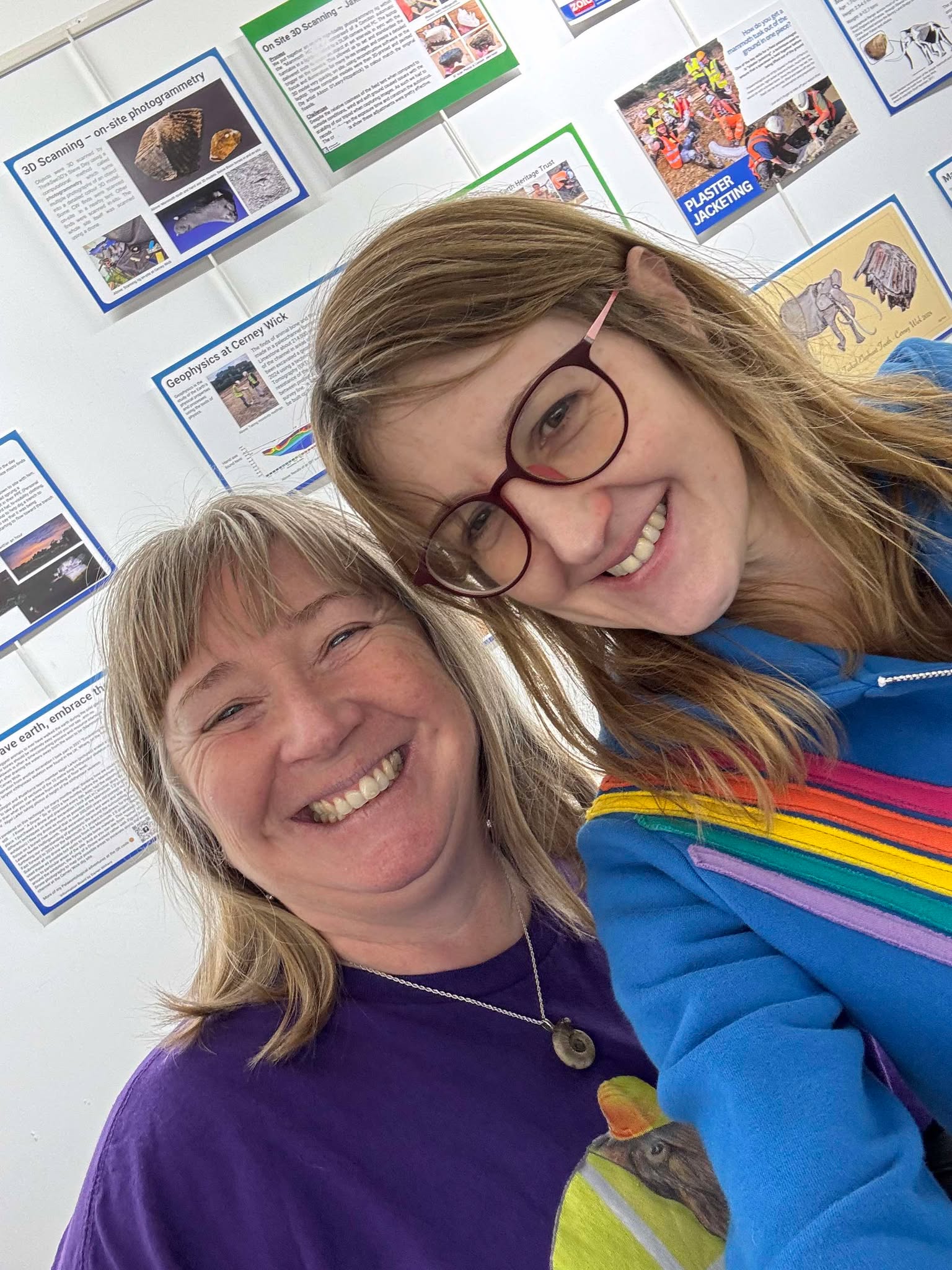


In the morning when faced with four stark white walls and boxes of bones and fossils, it was a tad daunting, but with the Hollingworth’s signature enthusiasm and exhibition gradually took shape. The sheer scope of the task and the hours of effort put into the preparation is evident. It is an amazing (I know I’m bias) and excellent exhibition. It is well worth a visit during its month-long run. Plus is on during half term!


The exhibition runs from 15th February to 15th March 2025, visit here for more details.


Saturday, 30 November 2024

Remembrance Day For Lost Species by Human Activity


Today 30h November is, ‘Remembrance Day For Lost Species by Human Activity’. It a day dedicated to the species of animals that humans have had a hand in their extinction, to raise awareness about our impact on other species especially those which are endangered.


From the pin up of all extinction caused by humans – the dodo, where our activities, not only, wiped them out in its natural habit in Mauritius, but we now know that we shot what we knew at the time to be last living specimen, which was executed in captivity in Oxford (read more here) . To its cousin the Passenger Pigeon that once had flocks so large that it would block out the sun when they migrated across North America, which were hunted to extinction in just a few decades.


From The Great Auk, that tragically we knew we’d hunted to near extinction, and in bid to gain more knowledge about how to conserve the species, we killed the last living specimens in the name of research. To the Thylacine or Tasmanian Tiger that we hunted to extinction and carelessly let the last one was freeze to death when a zookeeper failed to let it in one winter night.

Of course as its me so I can’t not mention the mighty mammoth where is looks increasing likely that our activities played a role in their demise. Sadly the list of tragic cases like these go on.

So I thought I’d do a little post on recommended documentaries and of course books that tie in with this important theme.

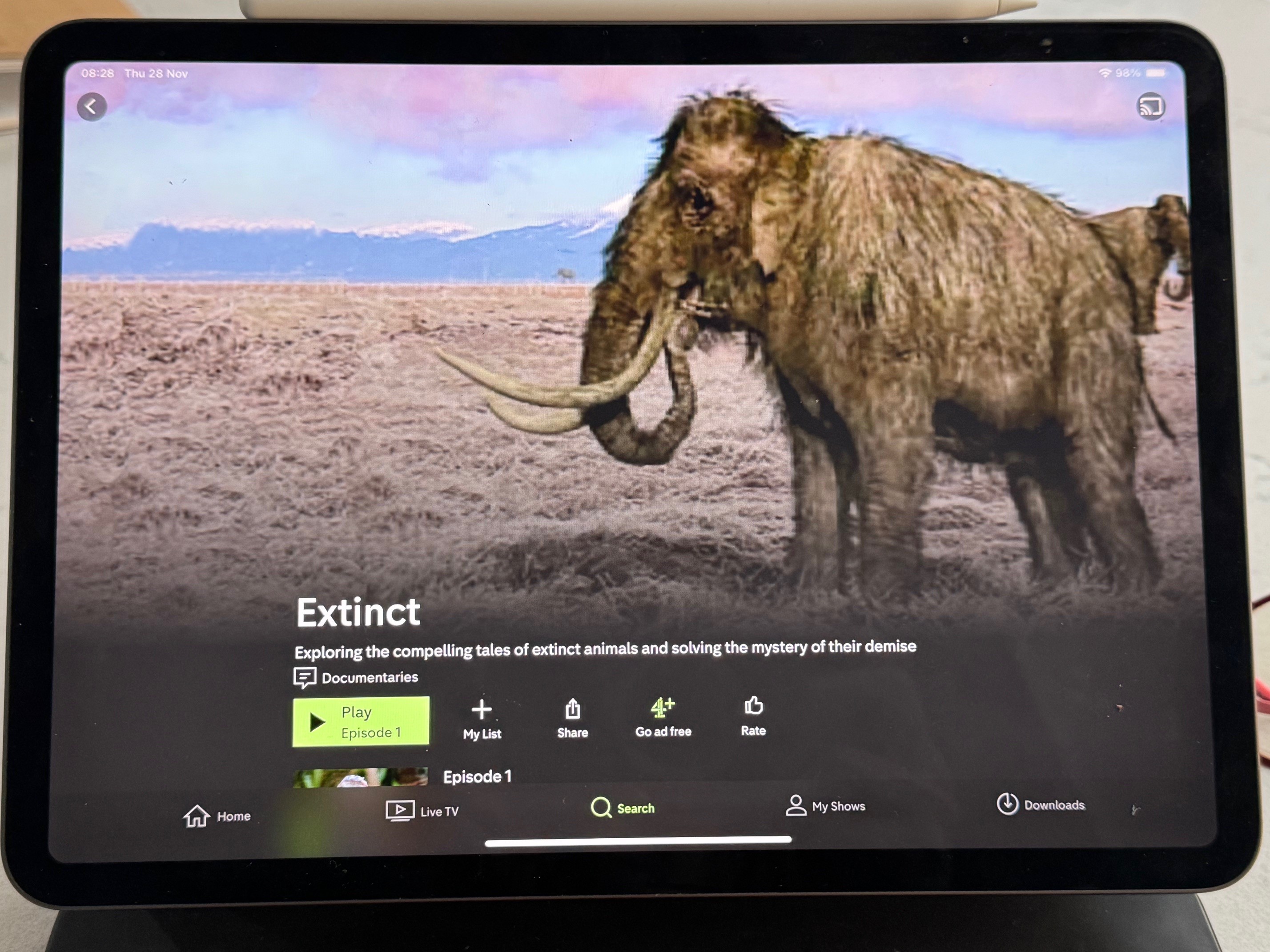
Extinct – Channel Four Documentary series is free to stream and its accompanying book by Simon Furman


This series looks at six different extinct species and dedicates an episode to investigating what cased their demises. There are some where humans did not cause their extinction but others where we with varying levels, had a hand in their ultimate fate. It is definitely worth having a watch/read.


Lost Animals a Photographic record by Errol Fuller


This is a very poignant book, which does exactly what it says on the tin. It shows the last photographs – sometimes grainy or out of focus as many were taken when photography was a new science/art form, of a species before they became extinct. In many case the species were already functionally extinct with no way to reverse the process and knowing that the person behind the camera were aware that they were making a historical record of an animal that soon not to frequent the planet is very sobering.

Weird and Wonderful Extinct Animals by Cristina Banfi and illustrated by Rossella Frionfretti


This is a beautifully illustrated non-fiction picture book, which is a great introduction to the subject for children. It starts with an easy and un-scary but informative introduction to extinction, what it is, what causes it, including a paragraph about how humans can contribute of cause extinction of other species.

It than has double pages dedicated to extinct fauna, with illustrations and facts, on some there is an explanation to why they went extinct and if we as a species had a part to play in their demise. About three questers of the way through there’s a page about extinction here and now, which includes a section about what we are a species and as individually can do to stop of slow the process of extinction.


Endangered by Tim Finch


This is hefty but beautiful coffee table photographic book. That feature exquisite photographs of endangered species. This can be used as a call to arms, seeing all the animals that need our help with conservation efforts to stop them sliding out of existence. But most poignantly is the page desiccated to the already extinct passenger Pigeon, with a beautiful but sobering photograph of a taxidermy specimen of the last known of its kind that died in captivity. What a bold editorial choice to juxtapose it with the full colour high definition images of existing but endangered animals. It really hones the point, that these creatures could be next if our species don’t modify our behaviours.

I do hope some of you read or watch these recommendations. It’s a tough subject but we can learn so much from the past, and there are lesson we should definitely teach to the next generation, in order to stop these type of tragedies occurring again.

Bear in mind we human although the most destructive animals on Earth, we also are unique in as much a we care about other species. We are curios and we care for the other fauna and flora we share the world with, so lest put these attributes to good use!


Monday, 18 March 2024

Writing - So Much More than the Pursuit of Publication

Writing - So Much More than the Pursuit of Publication


Sometimes as a pre-published author I get tunnel vision, believing success is only one thing – getting published. But it is so much more. It just takes a wide angled lens to appreciate just how much more.

When you are on submission and the rejections are rolling in or worse, there is a void of rejections as is the modern way, and everyone seems to be getting contracts but you, it can seem as if success is binary, in print or failed. This is the time to take a step back and admire the view. Due to this exact reason and also not helped by a spell of bad health, this is what I have recently done.

I have done this before and posted about all the ways that writing has enhanced my life and my family's in multiple ways - read more here. But this time I wanted to do it specifically for my current project/submission ‘Ashley Grimes Mammoth Whisperer.’ To see how writing the book has embellished by life, and it is a really lovely view with lots of accomplishments to feel good about.

Firstly, I have rekindled my original love of illustration, as a direct result, as I started sketching the characters and settings. I am now working on developing a portfolio.

Space mammoth - illustration by me - crayons, ink, ipad. 


I had an article of non-fiction about Mammoths and climate change published in the amazing children’s periodical The Changeling Magazine, along with one of my illustrations. Read more here.


I’ve also been invited to do library and museum events to talk children and adults alike abut mammoths and their theoretical use to help combat climate change.


I’m now sometime referred to as Mammoth Lady or Mammoth Aunty (not actually by my a nephews or nieces!) which I love. Also, often people think of me when they stumble across a mammoth and send me photos/messages, which I adore. Who doesn’t like seeing a mammoth in the wild? Or send me mammoth things they've made - I love a surprise mammoth post!

A selection of handmade mammoth surprise post!


I have had the privilege of messaging, meeting, and making friends with some lovely equally - possibly even more - mammoth obsessed people than me. Like Beth Shaprio, professor of ecology and evolutionary biology who wrote the book, ‘How to Clone a Mammoth,’ who very kindly checked the science in my manuscript. 


Also, thanks to my longest friend Vicky Stowell – thank you, Sally and Nev Hollingworth, who are the amazing paleontologist's who found the Mammoth of Graveyard near Swindon.


Me (middle) With Sally and Nev Hollingworth - (photo by Nev (thanks Nev))


Lastly it was Sally and Nev who invited me to do something that I always wanted to do, go on a planetology dig. When I was a teenager, I desperately wanted to be a paleozoologist or anthropologist, but I was not permitted to take science and I was told by school I would never me allowed to do any scientific endeavour but to stick to art due to my dyslexia and dyscalculia. Of course at that tender age you believe it. So going to the dig was amazing. Full of lovely generous people. Although I personally didn’t find any bits of dead mammoth, I did help plaster a mammoth tusk ready for transport. Which was a real honour! 

Me helping with the plastering - thanks to Sally H for photo.


So, when the rejections are rolling in, and my lack of perceived achievement gets me down, I have to think - if I gave up writing what else would I miss? The answer is - a lot. A lot of awesome stuff!


Me at the dig! Thanks Sally H for the photo!


Wednesday, 28 February 2024

Writing like a Mammoth

For the novel I am currently submitting, Ashley Grimes Mammoth Whisperer, I had to write convincing and authentic fauna, in particular mammoths.

For context here’s the elevator pitch…


Ashley Grimes Mammoth Whisperer


Ash must save the herd of woolly mammoths that have been cloned to help slow global warming, from an evil big game hunting obsessed billionaire. By overcoming the difficulties of her dyslexia and dyscalculia and combining her skills in understanding mammoth behaviour with her friend’s, Ruby’s escapologist skills and Jack’s technical whizzery, the three children endeavour to save, a village, Ash’s dad and of course the mammoths!

Writing real and convincing animals can be difficult but is much easier if you have experience of keeping them or observing them in the flesh. This can be easy or tricky depending on the animal, dog – easy, Komodon Dragon – tricker, but a species which has long been extinct is impossible.

This can be avoided by cheating. And yes, I initially tried to cheat, but having my main protagonist be able to talk to the mammoths. The problem was it undermine the concept and stood the book in a weird position of being too old for a Chapter Book, and too young for Middle Grade. Upon several lovely folk’s invaluable feedback, who suggested that I take out the Doctor Doolittle element (you know who you are and thank you so much), I made the decision to rewrite. This time with no anthropopeia in sight.


It was the right course of action and improved the manuscript immeasurably, putting it firmly in the desired middle grade age group, but initially starting the task was daunting. What so I know about how mammoth behave? Oe how they interact with humans? I had obviously already done some research, but this edit meant that it had to greatly upped – mammoth style.

I do have animal husbandry experience – birds of various types, parrots, pigeons, even rheas. Reptiles – iguanas, chameleons, geckos. Fish. Small mammals – rodents, dogs, cats, sheep, alpacas. Yep, yep yep.

So how then to work out how a long dead species would behave? It had to be two-fold firstly – find out what is known about mammoths and their interactions with out ancestors. Secondly looks at mammoths closest living relative, elephants and more specifically Asian Elephants.


As I couldn’t afford a trip to India to meet actual elephants, then visiting a safari park to observe them from a distance would have to do. Plus watching every documentary, I could find on either elephants or mammoths.


The next one was the biggy. I may not been able to stretch to a trip to India but I could justify investing in books. I researched books, and brought any I could on elephants behaviour, mannerisms, culture, society and interactions with humans.


This was fascinating, as I read biographies of Jumbo and then the autobiography of his keeper. Books on animal husbandry and zoology, general elephant behaviour. Guides on being safe around elephants on safari. I also looked for any books on paleozoology and evolutionary biology about mammoths. In addition, I also looked at neanderthals and their interactions with fauna, and mammoths specifically.

Whilst I did this I was armed with many colours of highlighters and matching tag post-its. Why? Well, I love my emotional thesaurus for writing that I use all the time when writing in order to show characters emotions rather than tell, so I decided to create my own thesaurus of mammoths behaviours.


So anything of certain grouped behaviours or reactions, say anger and aggression, was highlighted one colour and a corresponding coloured tag put on the page. I also created a key, so I know which colour was which group of behaviours. This meant that while I was editing, I could find all the resources I needed for certain behaviours in my attempts to create an authentic and believable representation of the mammoths.


I also did the same for mammoth/human interactions,

It was a lot of work, but I believe the books is much, much better as a result. And if I am ever lucky enough to so a sequel at least I already have the resource at hand.

Monday, 6 November 2023

Magazines, Manchester, (a) Museum, Mammoths and Me!


After such a long gap in posting the proverbial blog bus comes with two posts in quick succession. The last few months have been busy.  Busy in the best of ways (covid aside), with lots of small things to celebrate.   The mammoth library event that I covered in last week’s post, and now this small bundle of celebration worthy things that cumulated in one magical mammoth day, in Manchester!

So being a pre-published writer/illustrator I’m always on the trail of seeing my work in print. I try to grasp all the opportunities I can. Subbing to agents, editors, pitch contests, feedback giveaways and when it came up in the summer to the submission window open to neurodiverse creatives for The Changelings Mini-Mag.

The Changeling project was founded my writer Emmy Clark and has produced the Changeling Annual, for middle grade readers full of fascinating stories, articles, activities, and vibrant illustrations, all by neurodiverse writers and illustrators from across the globe.  The Mini-Mag is the first periodical. The project has a close relationship with The Museum of Science and Industry of Manchester.

I was very honoured to have my ‘Rebuilding Mammoths’ article and accompanying illustration picked to be included in the first edition which has the theme of ‘Rebuild’, to tie in with the museum ongoing building work.


There was further excitement on receiving the virtual proof copy of the Mini-Mag, and seeing the amazing diversity and quality of the other features was humbling.

I was even more delighted to be told that over the half term, the Changeling Team alongside staff at the museum were running some workshops inspired by my article. So, when I was invited, not even wild mammoths could keep me away.


They asked if I could make a video of me reading my article, for them to play at the beginning of the workshops, of course I said yes! Then I had to quickly learn how to film and edit! I set up my room with a backdrop and balanced the iPad-and-the-pea style precariously on top of a table and boxes. To ensure I didn’t forget what to say, stuck on the wardrobes A3 sheets with my text printed on it.  Then complete with props I filmed. And filmed. And filmed. Until I eventually had an ok version. Lastly I edited in illustrations, and a video before sending on to the Changeling editor to do a final cut – who added subtitles and music.


On the day, my husband, son, and me, left at 6am and travelled up to Manchester. We arrived to rain. Lots of rain! Us being soft southerners hadn’t dressed accordingly, so by the time I got to the museum, my jean’s had a tide line up to my knees, my shoes were waterlogged and I looked like a drowned rat.


This made my nerves kick in. But I shouldn’t have worried, The Changeling Team, Emmy, Jenn and Alex were lovely and made me feel incredibly welcome.


The team were super organised and had all the activities prepared and everything set up by the time I arrived. Which gave us time for a lovely chat, before the whirlwind began.


Across the two workshops more than 45 children with their accompanying adults attended.  First came the video, it was weird and uncomfortable watching myself on screen, a very squirming kind of torture. Then the grand Mammoth Mask Making commenced.


While the creativity was happening, I circulated around the room, with a mammoth tooth I’d brought along, and talked to children and their adults about their amazing masks, but also about general mammoth and cloning facts.  

In both session I had parents initiate conversations about mammoth cloning and their proposed use to help slow (or slop the acceleration) of global warming. The discussions evolved to cover how the same technology is being used to help try save endangered species, and how inspiring the next generation to look to STEM and use their imaginations is so important for their future and that of the planet.


There were lots of smiles, and some truly momentous mammoth masks, in a rainbow of colours and styles.  The Changeling team were in their element, encouraging children to be creative, and by giving each child attending a free copy of the Mini-Mag – encouraging them to foster a love of stories too.

When the workshops were over and everything cleared away, I think we were all pretty tired. But the best was to come, as I was given a copy of the physical magazine. Seeing one of my mammoths in print alongside my article was a delight.


So, I send my heartiest of thanks to The Changeling team; Emmy, Jenn and Alex and to the lovely museum staff. Plus, a Big Mammoth Thank You to all the children and adults who came to the workshops and made some truly marvellous mammoth masks!


Wednesday, 1 November 2023

My First Mammoth Event!


The first time I started writing about mammoths was in 2008, it was a not very well conceived picture book. Fast forward a decade to 2018, and whilst attending a writing for children course at the Oxford University Centre for Continued Learning, I began writing a middle grade story about a Neanderthal and a mammoth. This also went on to a draw of partly planned rough drafts alongside my first mammoth manuscript.

Then in 2020, whilst researching de-extinction for a YA Neanderthal thriller, I read a book on the science of bring back long dead species called ‘How to Clone a Mammoth’ by Beth Shapiro. Despite being about bringing back many long dead faunas I got a bit distracted by mammoths. I think it was the plan for mammoths to help in the battle against global warming, and that there is already a home waiting for them, Pleistocene Park in Siberia, which really caught my imagination.


A few nights later I dreamt a scene (corny but it’s true) about three children studying ins a remote artic region, when the building begins to shake as a massive herd of mammoth amble into view. This became the starting point for my work in progress. In 2021 when I first succumbed to the dreaded covid, while in isolation I began drawing mammoths, and an obsession was well and truly born.


I am currently doing an edit on the book and hope to be out on submission soon. But at the same time, I have building up a portfolio of mammoth illustrations, and making friends with other mammoth enthusiasts.  This led to me being asked to participate in a local town’s Jurassic Festival – YES, I KNOW MAMMOTHS AREN’T FROM THE JURRASSIC PERIOD! But it is prehistoric!


So, with just a over a week to prepare, and shoestring budget I set to work.  I stated with a display. It had to engage every age group from toddler to the elderly, and not cost too much. Luckily, I managed to pick up a free exhibition display board from a marketplace social media site. I used the boards to display information about general mammoth facts, mammoth cloning, and the theories of their proposed benefits to helping with the battle against global warming.


Then about palaeontology and bit about one of the most exciting recently discovered mammoth sites, The Mammoth Graveyard as featured in the BBC David Attenborough, that was found by Sally and Nev Hollingworth near Swindon. 

Lastly, I displayed some of my mammoth illustrations.


I desperately wanted people to interact and chat and ask questions. So, I designed some craft sheets for children, design your own mammoth – cold proofing an Asian elephant, 3D mammoths and mammoth colouring.  I also created some takeaway sheets, with information of local mammoth places to visit, free mammoth documentaries to stream and recommended mammoth reading for all ages.


On the day I managed to squeeze into my mammoth skirt and set off. I set up the boards, crafts and also displayed various mammoth fossils, bones, and models for people to see and touch.

I felt nervous, but I shouldn’t have worried, as people were interested. Over the course of the hour and a half I spoke to as many adults as children with an age spread of toddler up to approximately mid-eighties. The conversations varied depending on who I was chatting too, with a lot of the adults being intrigued by the cloning and asking more questions about global warming and how cloning could be used in a broader sense to help endangered animals, to children asking about mammoth / human cohabitation. At one point I was even discussing the death of the last known living dodo and the chances of bringing the species back from extinction! Both adults and children alike were fascinated by the mammoth bones and fossils, the baby mammoth tooth causing quite a lot of excitement.


I was pleased to see few children (and a few adults) pick up the activities, especially the ‘design your own mammoth’ task, and I took time to engage with them and tell them how the chosen dress-up items for the elephants reflected how mammoths had evolved to adapt to survive in cold regions. A lot of children took the sheets home to share with siblings. Quiet a few people wanted to learn more so took the handouts about local mammoth places to visit and free documentaries to stream and/or took the handout of recommended mammoth books to read.


All in all I think it went well. I was delighted to share my love for mammoth with other people.